

Key Takeaways
- Spotting a wasp nest early prevents dangerous swarms and protects your family and pets from painful, potentially life-threatening stings.
- Wasps often build their nests in hidden areas like roof eaves, wall voids, and even underground, making regular property inspections crucial.
- Professional pest control provides the safest, most effective way to eliminate wasp nests, utilizing pet-safe methods and guaranteeing 100% satisfaction.
Warm weather in Missouri means spending more time enjoying your backyard, hosting barbecues, and relaxing on the porch. Unfortunately, stinging insects also love this time of year. Finding a wasp nest on your property can quickly ruin your outdoor plans and create a serious safety hazard for your family and pets.
We know that dealing with aggressive pests feels overwhelming. As your friends in the pest control business, we want to help you take back your yard. This guide explains how to identify wasp nests before they grow out of control, the real risks associated with these stinging insects, and why relying on expert technicians is the smartest move for your home.

How to Identify Wasp Nests Early
Catching a wasp problem early makes removal much safer and easier. In the spring, a queen wasp begins building a small nest to lay her first batch of eggs. At this stage, the nest might only be the size of a golf ball. If left completely unchecked, this tiny structure can grow to the size of a basketball by late summer, housing thousands of highly aggressive workers.
Watch for High Traffic Flight Paths
You do not always need to see the actual nest to know you have a problem. Pay close attention to the flight patterns of the insects in your yard. If you notice a steady stream of wasps flying in and out of a specific area, a nest sits nearby. Look closely at the edges of your roof, the gaps under your siding, or the entry points near your chimney.
Inspect Common Nesting Areas
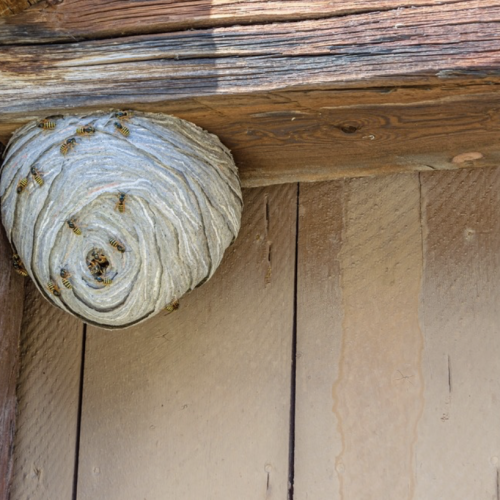
Wasps look for sheltered, secure locations to build their homes. Paper wasps often attach their umbrella-shaped nests to the eaves of your roof, the undersides of your deck, or the corners of your window frames. Yellowjackets, on the other hand, frequently build their nests underground in abandoned rodent burrows or deep inside the hollow voids of your walls. Hornets nest differently, building visible teardrop-shaped aerial nests. Our guide to hornets vs. yellow jackets explains how their nests, size and aggression compare.
Recognize the Nest Material
Most wasps in our area build their nests from a distinctive papery material. They create this by chewing tiny bits of wood fiber and mixing it with their saliva. If you spot grey or brown structures that look like they are made of papier-mâché attached to your home or outbuildings, you have found a wasp nest.
The Risks of Wasp Infestations
Ignoring a wasp nest puts everyone on your property at risk. Unlike honeybees, which can only sting once before dying, wasps possess smooth stingers. This allows a single wasp to sting you multiple times in rapid succession. When they feel threatened, they release a chemical alarm pheromone that signals the rest of the colony to attack.
Health Threats to Your Family
A wasp sting causes sharp, immediate pain followed by swelling and intense itching. For most people, this remains a painful nuisance. However, for individuals with severe allergies, a single sting can trigger anaphylaxis, a life-threatening allergic reaction that requires immediate medical attention. You never want to take chances when an aggressive colony lives right above your front door.
Dangers to Your Beloved Pets
Our curious dogs and cats often investigate buzzing insects, making them prime targets for wasp attacks. A pet that disturbs an underground yellowjacket nest can suffer dozens of stings in a matter of seconds. Because we deeply value pet safety, we highly recommend keeping your furry friends away from any suspected nesting areas until professionals clear the threat.
Property Damage
When wasps decide to build their nests inside your home’s structure, they can cause surprising amounts of damage. Some species will chew through drywall to expand their nesting space, eventually breaking through the ceiling or walls directly into your living areas. The moisture from a large, hidden nest can also ruin your insulation and wood framing.
Safe Removal Methods: Why DIY Fails
When homeowners spot a wasp nest, their first instinct often involves grabbing a can of bug spray from the hardware store. However, attempting to remove a nest yourself poses severe risks. Spraying a nest during the day when wasps are fully active will almost certainly provoke an aggressive, coordinated attack.
Furthermore, over-the-counter sprays rarely penetrate deep enough to kill the entire colony, especially if the nest sits underground or inside a wall void. If you plug a hole where wasps enter your house, they will simply chew another way out, often pushing them further into your interior rooms. Proper removal requires specialized protective gear, precise application methods, and a deep understanding of wasp behavior.
The Benefits of Professional Pest Control
Protecting your home from stinging insects requires expertise and precision. At Steve’s Pest Control, we provide fast, reliable solutions carefully tailored to your unique property. We take the danger out of pest removal so you can relax.
Rapid Response Team
When you have a dangerous wasp nest near your walkways or play areas, you cannot afford to wait. We offer swift pest control solutions to ensure your home remains safe. Our highly trained professionals arrive promptly, assess the situation, and implement an immediate action plan to neutralize the threat.
Expert Service Assurance
Our expert technicians know exactly how to identify the specific type of stinging insect plaguing your yard. We use this knowledge to select the most effective treatment method. Whether we need to safely extract an underground yellowjacket nest or remove a massive paper wasp structure from a high peak, we handle it all with precision and care.
Pet-Safe Protection
Your family’s safety, including your pets, drives everything we do. We utilize advanced, pet-safe treatments designed to aggressively target the pests while keeping your loved ones completely secure. We will walk you through our safety protocols so you feel confident and comfortable with our service.
Guaranteed Pest-Free Living
We proudly stand behind our work with a 100% satisfaction guarantee. Our comprehensive protection plans eliminate current infestations and proactively stop future colonies from establishing themselves on your property. We are not done until you are totally happy with the results.
Wasp Nests: 5 Star Solution
Don’t let wasps and other stinging insects compromise your family’s safety. Our 5 Star Service is the ideal solution for managing pests like wasps and bees within 10 feet of your building, alongside other common intruders such as spiders, ants, and mice. This year-round program focuses on exterior treatments to stop pests before they can establish a foothold, making it a safer and more convenient option for your household. You won’t even need to be home for our hassle-free exterior services. Best of all, our unlimited retreatment warranty means that if a covered pest issue arises at any time, we will come back and resolve it at no additional cost.
Ready to protect your home from wasp infestations? Schedule a free evaluation with Steve’s Pest Control today or call us at 1-844-896-4868 to learn more about our comprehensive service plans!

Frequently Asked Questions
Q: When do wasps typically build their nests?
A: Queen wasps emerge from winter hibernation in the early spring to begin building their new nests. The colonies grow rapidly throughout the warm summer months and reach their peak size and aggression levels by late summer and early fall.
Q: Are wasps and bees the same thing?
A: No, they are very different. Bees are generally fuzzy, essential pollinators that usually only sting if directly provoked. Wasps feature smooth bodies, pinched waists, and display much more aggressive behavior, often attacking with little provocation to defend their territory.
Q: Why should I avoid removing a wasp nest myself?
A: DIY removal is extremely dangerous. Wasps fiercely defend their nests and can sting multiple times. Without professional-grade protective suits and specialized treatment tools, you risk severe stings and potentially driving the wasps further into your home.
Q: Are your wasp control treatments safe for my pets?
A: Yes, absolutely. We prioritize pet-safe protection. Our expert technicians carefully apply targeted treatments that eliminate the wasp colony while strictly following safety protocols to ensure your dogs and cats remain completely unharmed.
Q: What happens if the wasps return after treatment?
A: We offer a 100% satisfaction guarantee. If stinging insects return to the treated area, our rapid response team will come back to re-evaluate and re-treat your property at no additional cost, ensuring your home stays protected.