

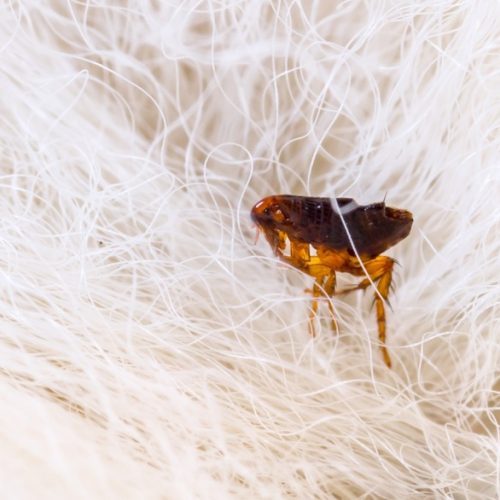
Key Takeaways:
- Store-bought sprays usually only kill adult fleas, leaving eggs and larvae behind to hatch later.
- Most of a flea infestation is entirely hidden within carpets, furniture, and cracks in the floor.
- Effective flea control requires treating the entire life cycle, both indoors and outdoors.
- Consistent pet prevention and professional pest control are the best ways to achieve long-term relief.
Your dog starts scratching nonstop. Soon after, you notice small, itchy bites appearing around your ankles. Suddenly, fleas seem to be everywhere in your house. It is a stressful situation that sends many homeowners rushing to the hardware store for the first flea spray they can find, hoping for an immediate fix.
Unfortunately, fleas are one of the most difficult household pests to fully eliminate. While you might see a few dead bugs after using an over-the-counter spray, surface-level treatments often miss the core problem. The fleas you actually see make up only a tiny fraction of the total population invading your living space.
If you are tired of fighting a losing battle against these tiny pests, you are not alone. As your friends in the pest control business, we want to help you understand exactly why these bugs are so persistent and what you actually need to do to get them out of your home for good.
Why Fleas Become Such a Big Problem So Quickly
Flea populations explode seemingly overnight. Understanding how they operate is the first step in taking back your home.
Fleas Reproduce Fast
A single flea infestation can grow at an alarming rate. One female flea can lay up to 50 eggs a day. These pests do not just stay on your pet, either. They lay eggs that fall off into your carpet, embed themselves in furniture, hide in pet bedding, and settle deep into cracks in your flooring.
Most of the Infestation Is Hidden
Adult fleas are only a small part of the problem. In fact, adult fleas usually make up only 5% of an infestation. The other 95% consists of eggs, larvae, and pupae hidden deep within fabrics and flooring. Because they are out of sight, they are often entirely missed by standard cleaning and DIY pest control efforts.
Missouri Summers Make It Worse
Warm temperatures and high humidity create the perfect environment for fleas to thrive. Peak flea activity often increases dramatically during the hot summer months. The climate allows them to reproduce faster and survive longer outdoors, putting constant pressure on your home’s defenses.
The Biggest Problem With Store-Bought Flea Sprays
When you grab a spray bottle from the store, you expect it to solve the problem. Here is why that rarely happens.
They Usually Only Kill Adult Fleas
Most over-the-counter sprays target visible adult fleas. They knock down the bugs actively jumping around your home. However, the eggs and larvae survive the chemical application and simply continue their life cycle, waiting to mature and start the biting process all over again.
Fleas Can Keep Emerging for Weeks
Flea pupae enclose themselves in a tough, sticky cocoon that protects them from most household chemicals. They can remain safely inside this cocoon and hatch weeks or even months later. Homeowners often think the infestation is gone, only for a fresh batch of hungry fleas to suddenly reappear.
Surface Treatments Miss Hidden Areas
Fleas hide deep in environments where surface sprays simply cannot reach. They burrow down to the base of carpet fibers, squeeze into upholstery seams, hide behind baseboards, and nestle into pet resting areas. A quick topical spray will not penetrate deeply enough to reach these hidden zones.
Inconsistent Application Creates Gaps
DIY treatments are often applied unevenly. Missing even a few small areas can allow the infestation to continue. Without professional equipment and training, it is incredibly difficult for a homeowner to achieve the thorough coverage necessary to stop an active flea cycle.
Why Flea Infestations Are So Hard to Eliminate
Fleas are resilient survivors. Their biology and behavior make them uniquely stubborn pests.
Flea Life Cycles Are Complicated
The flea life cycle consists of four stages: egg, larva, pupa, and adult. Different stages require different treatment strategies. An effective plan must use insect growth regulators to stop eggs and larvae from maturing, alongside targeted treatments to eliminate the biting adults.
Pets Can Reintroduce Fleas Constantly
Even if you treat your home perfectly, your pets can bring new fleas inside. Outdoor exposure in your yard, contact with wildlife around the property, or visits to shared environments like dog parks and boarding facilities can constantly reintroduce these pests to your living areas.
Fleas Can Survive Longer Than People Realize
Flea pupae are especially resistant to environmental changes and treatments. Some fleas may emerge weeks after you spray your home, waiting for the vibration of footsteps or the warmth of a passing pet to signal that a meal is nearby.
Signs Your Flea Problem Is Bigger Than You Think
Sometimes it is hard to tell if you have a minor nuisance or a full-blown infestation. Look for these warning signs.
Pets Continue Scratching
If your pets are still scratching, biting, and licking themselves even after you use flea sprays or shampoos, the infestation is still active in their environment.
Bites Around Ankles or Legs
Waking up or walking around the house and discovering itchy red bumps around your ankles is a common sign that fleas are highly active indoors and actively seeking a food source.
Fleas Jumping on Socks or Carpet
If you wear white socks and walk across your bedroom or living room, you might see small black specks jumping onto your feet. Seeing fleas out in the open means the population is already large.
Repeated “Comeback” Infestations
If the fleas seem to disappear briefly after a DIY treatment but return a week or two later, you have an established breeding cycle inside your home.
What Effective Flea Control Actually Requires
Getting rid of fleas takes a comprehensive approach. A single can of bug spray is never enough.
Treating the Entire Flea Life Cycle
Since adults alone are not the real issue, professional treatment targets the entire life cycle. This includes eliminating eggs, stopping larvae from growing, killing adults, and treating the primary breeding zones simultaneously.
Indoor and Outdoor Treatment
Yards often contribute heavily to reinfestation. Shaded, moist areas under decks or low-hanging shrubs harbor fleas outdoors. Treating the exterior of your home is just as important as treating the interior.
Coordinated Pet Treatment
Veterinary flea prevention is critical. Environmental pest control and pet care must work together seamlessly to protect your family. Keep your pets on a vet-approved flea preventative year-round.
Follow-Up Treatments Matter
One treatment is rarely enough for well-established infestations. Monitoring the situation and performing necessary retreatments helps break the flea life cycle completely, ensuring no late-hatching pupae survive.
How Homeowners Can Help Reduce Flea Activity
You can partner with your pest control professional by taking a few important steps around the house.
Vacuum Frequently
Vacuum your carpets, rugs, furniture, and along baseboards daily during an infestation. The suction removes adults, eggs, and larvae, and the vibration encourages stubborn pupae to hatch so treatments can affect them. Always empty the vacuum outside immediately.
Wash Pet Bedding Often
Gather up your pet’s blankets, beds, and any soft toys. Wash them in hot water to help kill hidden flea eggs and larvae.
Reduce Wildlife Around the Home
Raccoons, stray cats, opossums, and other animals carry fleas into your yard. Keep trash cans sealed and avoid leaving pet food outside to deter these flea-carrying animals from visiting your property.
Maintain Consistent Pet Prevention
Year-round flea prevention for all household pets is the best defense against an infestation taking root in the first place.
When It’s Time to Call a Professional
Sometimes, the best thing you can do for your family and your pets is to hand the problem over to the experts.
DIY Treatments Aren’t Working
If fleas continue appearing after you have tried multiple sprays, powders, or bombs, it is time to stop wasting money on ineffective products and get expert help.
Infestations Spread Throughout the Home
When you start noticing fleas in multiple rooms—not just around the dog bed—the infestation is spreading and requires a thorough, whole-home approach.
Pets and Family Members Are Constantly Getting Bitten
Constant bites indicate the infestation is well established and heavily populated. No one should have to feel uncomfortable in their own home.
Professional Treatment Provides Long-Term Control
A professional pest control service provides thorough inspections, targeted treatments, and follow-up strategies. We can also give you tailored prevention recommendations to keep your home pest-free moving forward.
Fleas Require More Than a Quick Spray
Fleas are incredibly persistent because most of the infestation remains hidden out of sight. Store-bought sprays may provide you with a few days of temporary relief, but they consistently fail to eliminate the source of the problem.
If you are dealing with a recurring flea issue, we are here to help. Professional flea control is the safest, most effective way to protect your pets and your family. Reach out to us today for long-term relief, and let us help you reclaim your comfortable, itch-free home.

Frequently Asked Questions
Q: Why do I still have fleas after spraying my house?
A: Most over-the-counter sprays only kill adult fleas. The eggs, larvae, and protective pupae survive the spray, allowing a new generation of fleas to hatch days or weeks later.
Q: Do I need to treat my yard for fleas?
A: Yes, treating your yard is highly recommended. Outdoor shaded areas are common breeding grounds for fleas. If you only treat the inside of your home, your pets will likely bring new fleas right back inside after going out to the yard.
Q: How long does it take to completely get rid of a flea infestation?
A: Because of the complex flea life cycle, it can take anywhere from a few weeks to a couple of months to fully break an established infestation. Consistent vacuuming, pet treatments, and professional pest control are required for complete elimination.