

Key Takeaways
- Cluster flies, boxelder bugs, and Asian lady beetles invade in September as overwintering pests searching for warm winter shelter, not because your home is dirty.
- Warm south- and west-facing walls attract large numbers, which is why you see bugs on the side of your house in fall.
- Boxelder bugs are a nuisance, not a structural threat, while Asian lady beetles can bite, stain, and produce an odor.
- Fall pest control is most effective in September and early fall, before insects move indoors.
- Sealing cracks, repairing screens, and scheduling professional treatment are the best ways to keep bugs out of your house in winter.
What’s Behind the Annual Fall Invasion, and What You Can Do About It
September in Mid-Missouri is a beautiful month. The nights cool down, the days get shorter, and the trees start turning. But if you’ve noticed large numbers of slow-moving flies gathering on your siding, clusters of black-and-orange bugs near your windows, or what looks like ladybugs appearing around your roofline, you’re not imagining things. Fall pest activity in Missouri follows a very predictable pattern, and understanding it makes all the difference in protecting your home.
These insects aren’t suddenly “infesting” your property. They’re not there because your home is dirty or because there’s food available. They’re doing something far more instinctive: they’re looking for a warm, protected place to spend the winter. And your home, with its cracks, gaps, attic spaces, and wall voids, looks like a five-star hotel to a bug facing a Missouri winter.
The good news is that overwintering pests in Missouri are highly manageable—but only if you act at the right time. September and early fall represent the critical window for prevention. Once these insects work their way into your walls and attics, the problem becomes considerably harder to address.
This guide walks you through exactly what these three common fall pests are, why they show up when they do, and what steps you can take to keep them outside where they belong.
Why Do These Bugs Show Up in September?
The behavior driving this seasonal invasion is called overwintering. As temperatures drop in late summer and early fall, certain insects begin searching for sheltered locations where they can remain dormant through the winter months. They’re not actively feeding or breeding inside your home. They’re simply trying to survive.
Homes offer exactly what overwintering insects need: protection from the elements, stable temperatures, and plenty of small entry points. Gaps around windows and doors, cracks in siding, openings around utility penetrations, and spaces behind soffits and fascia all serve as perfect entry points.
One detail that surprises many homeowners: south- and west-facing exterior walls tend to attract the largest concentrations of these insects. On warm, sunny fall afternoons, these surfaces absorb and radiate heat, which draws insects in large numbers. If you see bugs congregating on one side of your house but not the other, that’s almost certainly why.
This is also an important distinction worth repeating. These bugs aren’t a sign of poor housekeeping or a food source problem. They’re a sign that your home’s exterior has openings (which most homes do) and that the season has shifted. Fall pests in Missouri don’t discriminate based on how clean your kitchen is.
The Three Common Fall Invaders Mid-Missouri Homeowners See
Cluster Flies: What Are They and Why Are They in Your Home?
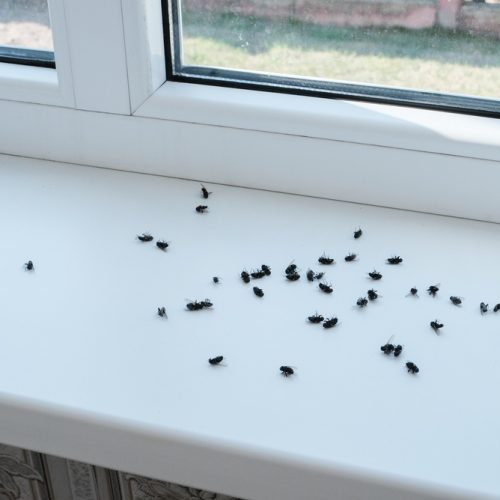
Cluster flies look similar to common houseflies at first glance, but there are a few key differences. They’re slightly larger, move more sluggishly, and have a distinctive golden-yellow hair pattern on the thorax. When they’re at rest, their wings overlap across their backs – unlike houseflies, which hold their wings more to the sides.
Their name comes from exactly what they do: cluster. You may see dozens or even hundreds of them gathering around windows, particularly on sunny days in late fall and during warm spells in winter.
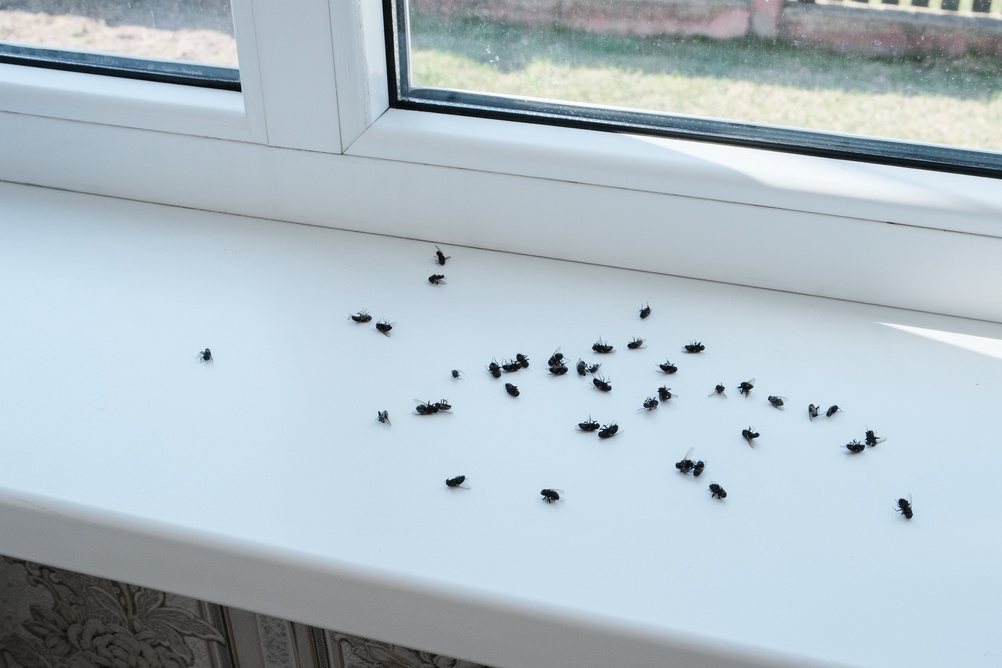
Here’s something that surprises most people: cluster flies aren’t breeding inside your home, and they have no interest in your food. Their larvae develop as parasites inside earthworms in the soil during summer. By fall, the adult flies are simply looking for a warm place to overwinter, and the gaps around windows, soffits, and wall voids of your home make ideal shelter.
The most disorienting part of a cluster fly situation is what happens mid-winter. On an unusually warm January or February afternoon, the heat inside your walls or attic wakes them up. They emerge (often in significant numbers) crawling slowly across windows and interior surfaces. Homeowners who didn’t notice them enter in fall are often confused and alarmed by this sudden appearance months later.
Boxelder Bugs: Identification, Behavior, and What Draws Them to Your Home
Boxelder bugs are easy to identify once you know what you’re looking for. They have a dark brown or black body with distinctive reddish-orange markings along the edges of their wings and thorax. Adults reach about half an inch in length. Nymphs (immature boxelder bugs) are smaller and primarily red.
As the name suggests, boxelder bugs have a strong association with boxelder trees, as well as silver maples and ash trees. Homes near these trees, particularly female boxelders, tend to see significantly higher populations in fall. The insects feed on seed pods during the warmer months and then shift their focus to finding winter shelter as temperatures drop.
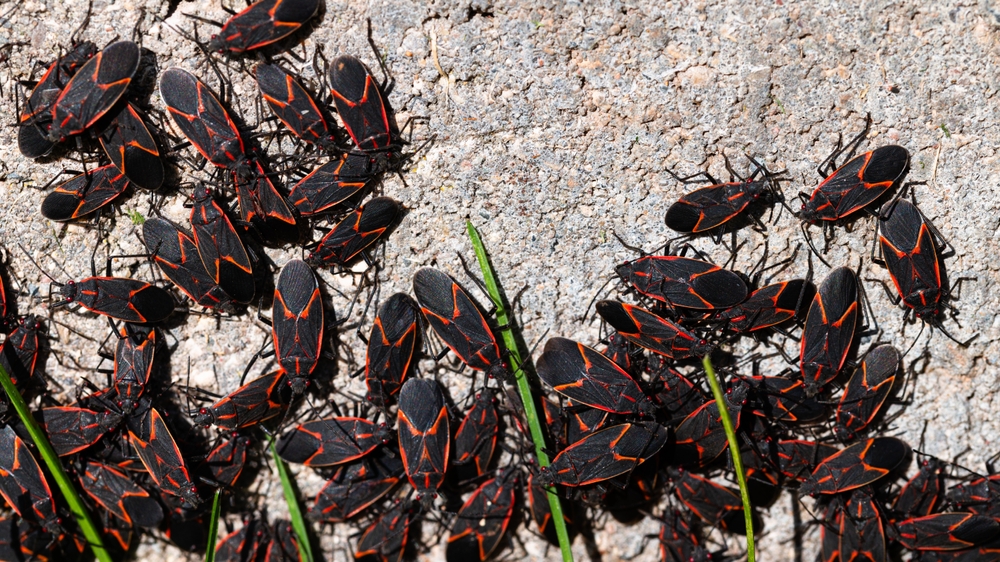
Like cluster flies, boxelder bugs congregate in large numbers on warm, south- and west-facing exterior surfaces on sunny fall days. From there, they squeeze through gaps in siding, around window frames, beneath door sweeps, and into any other opening they can find. Inside, they hide in wall voids and other protected spaces.
Their primary impact is nuisance. Boxelder bugs don’t sting, don’t cause structural damage, and don’t breed indoors. However, large populations inside a home are understandably unwelcome, and when crushed, they can leave a reddish stain on surfaces. Their waste can also stain fabrics and light-colored surfaces.
Asian Lady Beetles: Not the Ladybugs You’re Used To
This is where things get a little complicated. Many Mid-Missouri homeowners see what they think are ladybugs gathering around their homes in fall. In most cases, they’re actually Asian lady beetles, and while they look similar, the differences matter.
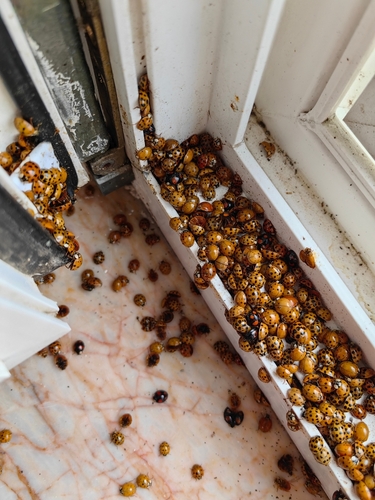
Native ladybugs (the kind we grew up thinking were good luck) are small, bright red with black spots, and rarely enter homes. Asian lady beetles, introduced to the United States in the 1900s and now widespread throughout Missouri, look similar but vary considerably in color. They can range from pale orange to bright red, and the number of spots varies from zero to 20. One reliable identifier: Asian lady beetles typically have a dark, M-shaped marking just behind their head.
Asian lady beetles gather on the exterior of buildings in fall for the same reason as cluster flies and boxelder bugs – they’re searching for overwintering sites. They’re particularly good at finding and squeezing through very small openings, which makes exclusion challenging.
Unlike the harmless reputation that ladybugs enjoy, Asian lady beetles come with a few unpleasant traits. When threatened or crushed, they release a yellowish fluid that can stain walls, fabric, and upholstery. This fluid also has a noticeable, unpleasant odor. Additionally, Asian lady beetles can and do bite or pinch, not hard enough to break skin in most cases, but enough to be irritating, particularly for children or pets.
Don’t Wait Until Fall Pests Are Inside Your Home
This is the part that catches most homeowners off guard. Once cluster flies, boxelder bugs, or Asian lady beetles have worked their way into your wall voids or attic to overwinter, eliminating them becomes a much more difficult task.
Insects hidden inside the walls aren’t accessible to surface treatments. They may emerge periodically throughout winter during warm spells, and they’ll make their way back out again in spring—sometimes through interior surfaces rather than exterior ones. That means if you wait until you’re seeing bugs crawling across your living room windows in January, you’re already dealing with a problem that’s significantly harder to correct.
Fall prevention is about stopping entry before these populations establish themselves inside protected areas of your home. Acting now in September and early October puts you in the position of keeping them outside, which is far simpler than trying to address them once they’re in.
There’s another practical reason to avoid waiting. When homeowners start seeing bugs emerge indoors during winter, the instinct is often to reach for whatever spray product is available. Interior sprays rarely reach the areas where overwintering insects are actually hiding, and they don’t address the underlying entry points that allowed the insects in. Professional exterior treatment timed to fall pest activity targets the problem where it actually exists.
How to Keep Fall Invaders Out of Your Home
Physical exclusion – sealing the openings these insects use to enter – is your first and most important line of defense against fall pests in Missouri. Here’s where to focus your attention:
- Windows and doors: Check and replace worn weatherstripping and door sweeps. Inspect the caulking around window frames and reseal any gaps.
- Siding and exterior walls: Look for cracks or gaps where siding meets the foundation, around corner trim, and where different materials meet.
- Utility penetrations: Pipes, cables, HVAC lines, and electrical conduits that pass through exterior walls often leave small gaps around them. These need to be sealed.
- Vents, soffits, and fascia: These areas are frequent entry points for cluster flies in particular. Inspect and repair any damaged screens or gaps.
- Doors and windows: Check the weather stripping and sealant around doors and windows, and replace or repair any damaged areas.
- Roof lines: Inspect the roof line for gaps or cracks, especially where different materials meet. Repair these immediately to prevent pest entry.
Timing Matters With Fall Pest Control
Here’s where a little know-how really pays off. September and early fall are the sweet spot for fall pest control because treatment is most effective while insects are still gathering outside and actively searching for entry points. At this stage, you can intercept them before they slip indoors.
Wait until November or December, and the whole situation changes. By then, many bugs coming inside in fall have already found their way into protected areas, making treatment more complicated. Keep in mind that pest activity shifts with temperatures and weather patterns, so the ideal timing isn’t simply a date on the calendar. Our expert technicians read those seasonal cues and treat when it counts most.
What If Fall Pests Are Already Inside?
First, don’t panic. Spotting a few of these insects indoors doesn’t automatically mean you have an active infestation. Often it’s just a handful of overwintering pests that wandered in.
Here’s what to do:
- Vacuum visible insects and empty the canister or bag afterward.
- Avoid crushing Asian lady beetles, since they can stain surfaces and release an odor.
- Don’t rush to seal interior exit points until you understand where the insects are coming from, or you may trap them inside your walls.
The smartest move is to call Steve. We can identify the species, determine likely entry areas, and recommend whether treatment, exclusion, or both make the most sense for your home.
Protect Your Mid-Missouri Home Before Fall Pests Move In
The best time to deal with overwintering pests isn’t when they’re crawling across your windows in January. It’s before they ever move in.
At Steve’s Pest Control, we understand the rhythms of Mid-Missouri pest cycles inside and out. We’re not a company that just shows up and sprays something and leaves. We’re your friendly local experts, backed by a 4.9-star rating from more than a thousand reviews, pet-safe treatments, and a 100% satisfaction promise. Our rapid response team is ready to help you keep your home comfortable all season long.
Schedule a fall pest inspection or preventative treatment with Steve’s Pest Control today, before cluster flies, boxelder bugs, and Asian lady beetles settle in for the winter. Call us or visit our website to get started.

Frequently Asked Questions
Why are bugs gathering on the outside of my house?
As temperatures drop in fall, insects like cluster flies, boxelder bugs, and Asian lady beetles seek warmth and shelter. Sunny south- and west-facing walls hold heat, so bugs congregate there before searching for openings to overwinter inside.
Why do I see flies in my house during winter?
Those are likely cluster flies that entered in fall to overwinter in attics and wall voids. On warm winter days, they wake up and head toward windows and light, which makes them suddenly appear indoor?
Are Asian lady beetles harmful?
They’re not dangerous, but they can be a real nuisance. Asian lady beetles in the house can bite or pinch, release an unpleasant odor, and leave yellowish stains if crushed. Vacuuming them is the safest way to remove them.
Do boxelder bugs damage homes?
No. Boxelder bugs in Missouri are primarily a nuisance and don’t damage your home’s structure, wiring, or wood. Large groups indoors are unwelcome, though, so prevention is still worthwhile
When should I treat for fall pests?
September and early fall are ideal, while insects are still gathering outside. Waiting until late fall or winter is less effective, since many pests have already moved into protected areas by then.