BALDFACED HORNET
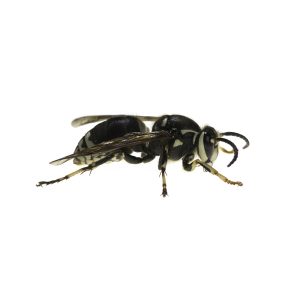
"Length ¾” The Bald-Faced Hornet is actually a wasp and can be easily identified by its black and white markings (most stinging insects are black and yellow). The hornets construct and easily identifiable pear-shaped paper nest that can become quite large. While more docile than other yellow jackets, the hornet is extremely protective of its nest and will sting repeatedly if disturbed."
BUMBLE BEE
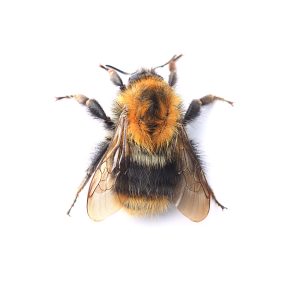
"Length ¾”–1 ½” These large, black and yellow, furry insects can often be seen bouncing around the yard collecting pollen and nectar. They are not aggressive and will only sting in self-defense. Their stingers are not barbed like a honeybee, therefore giving them the capability to sting would-be predators repeatedly."
CICADA KILLER
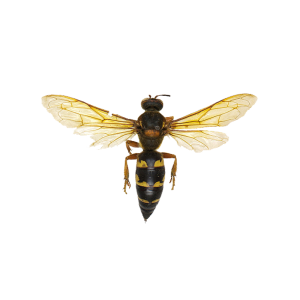
Image: Ronald F. Billings, Texas Forest Service Length: 2″ These wasps can be formidable because of their large size, but rarely sting unless bothered. They nest in the ground and their burrows can be found in many lawns. The adults feed on nectar while the larvae feed on cicadas that the adults bring back to the nest.
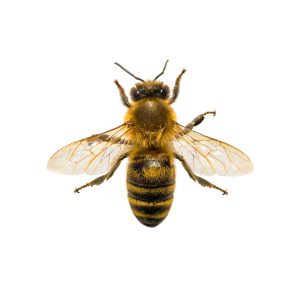
HONEY BEE
"Length ½”–⅝” The common domesticated honey bee, not the feared “killer bee”, are a non-aggressive bee commonly found around Mid-Missouri. These black and yellow bees will only sting when threatened and will lose their barbed stingers and die when they do sting something. They are a beneficial in the pollination of flowers and production of honey. Honey bees are one the few insects that are able to remain active during the winter. While most adult insects die during the winter, honey bees can metabolize their honey to prevent freezing to death."
PAPER WASP
"Length ¾”–1” The Paper Wasp is a slender, narrow-bodied insect with long legs. They are reddish-orange to dark brown or black in color and have yellow markings on their abdomen. Their paper nest is umbrella shaped and has hexagonal cells that are left open and visible. Paper Wasp nests can often be found along eaves, window frames, porch ceilings, rafters, etc."
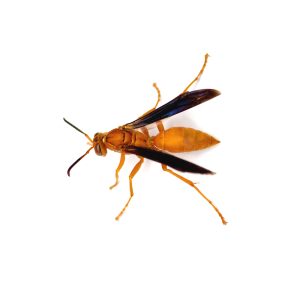
RED PAPER WASP
"Length ¾”–1” This species displays the same nesting characteristics as the Paper Wasp. The only difference between the two is the color (Red wasps are red!)."
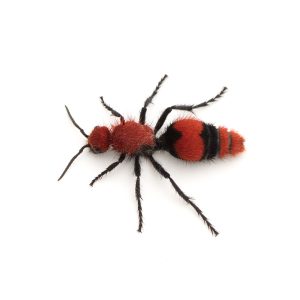
RED VELVET ANT
"Length ¾” The Velvet Ant or “cow killer” is actually not an ant at all, but a wasp. These black insects have red-orange hair on their thorax and abdomen. Females are wingless and pack a painful sting while the males are winged but are unable to sting."
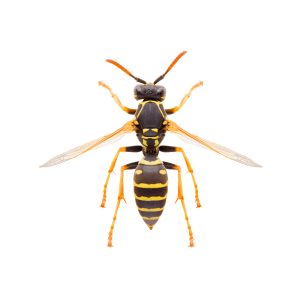
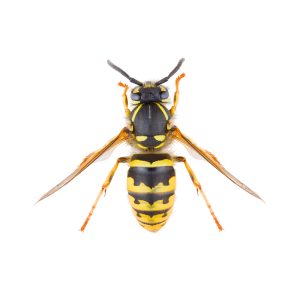
YELLOWJACKET
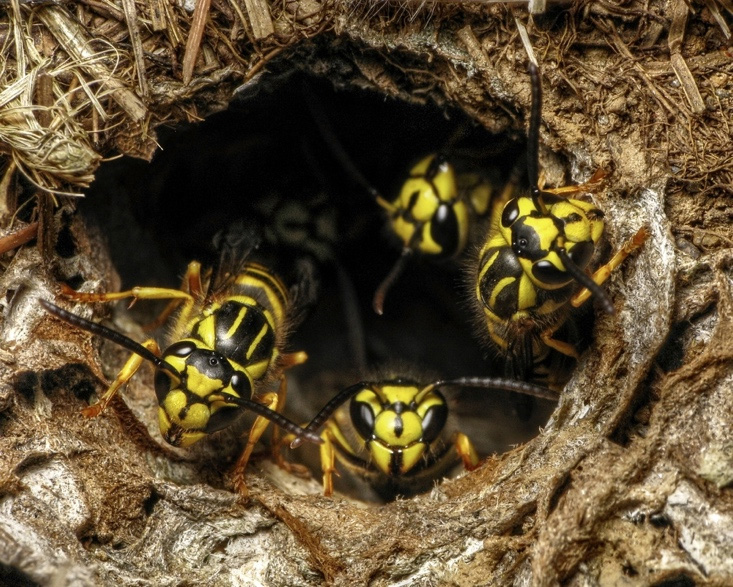
"Length ½” These nuisance pests are black and yellow in color. They build a paper nest that can get as large as a basketball and tend to nest in protected areas such as trees and shrubs, but may also nest in sheds, porches, attics, wall voids, etc. The yellow jacket can be extremely aggressive and can sting repeatedly without provocation. The yellow jacket can commonly be found scavenging for human food at picnics, cookouts, and around garbage cans or dumpsters."
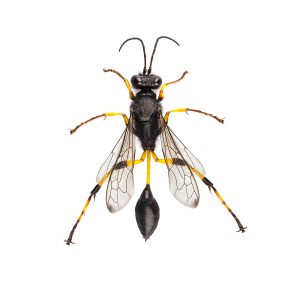
MUD DAUBER
"Length ½”–1” These long, slender wasps are usually black with yellow markings but some species may also have a metallic blue or black coloring. They can be easily identified by their thin, thread-like waist. Mud dauber nests are constructed out of mud and can be found under eaves, porch ceilings, inside garages, sheds, barns, etc. Mud daubers are solitary wasps and do not defend their nest, therefore stings are rare."