Shawn is a licensed Service Technician for Termite and General Pest Control with 7 years of field experience. Shawn is also an Authorized Service Technician for the Sentricon Termite Colony Elimination System and services: Auxvasse, Black Water, Boonville, Centralia, Clark, Columbia, Fayette, Glasgow, Hallsville, Harrisburg, Mexico, Moberly, Prairie Home, Pilot Grove, and Rocheport.

Bed Bugs Prevention Tips

Posted by Steve's Pest Control December 30, 2011

You may have heard the myth that bed bugs are found only in dirty conditions. Truth is, bed bugs can infiltrate even the cleanest homes and find places to hide. Taking precautions before, during and after your travels may sound like a lot of work; but if you want to keep your home bed bug free, you have to protect yourself and your family.

BEFORE YOU GO

Research Hotels

Check tripadvisor.com, hotelchatter.com and bedbugregistry.com for hotels you’re considering. While there’s no guarantee that all travelers report bed bug infestations at hotels, checking these sites will at least reduce the chances of you staying at one with the problem.

Choose the Right Luggage

Use hard luggage that closes tightly instead of soft luggage with zippers. Bed bugs are small enough to squeeze through closed zippers and they like fabric more than metals and plastic.

WHEN YOU CHECK INTO YOUR HOTEL

Protect Your Luggage

Never put your luggage on the bed or couch in your room. Place your bag(s) on a hard, light-colored surface, a luggage rack (after you give it a good look over,) or put them in the bath tub while you check your room.

Check Your Room

As unpleasant as it sounds, you need to check for bed bug eggs, fecal stains, molted exoskeletons and the bugs themselves. Here are the places to check:

  • Mattresses and seams.
  • Behind the headboard for any cracks that might have bed bugs.
  • The underside of bed where the box spring is (if you can safely lift it out of the frame.)
  • The creases of drapes, seams of couch cushions, cracks and crevices of any furniture
  • Cracks near wall trim, behind picture frames and any joints where floors and walls meet.

Before you leave

Even if you didn’t see any signs of bed bugs and you appear bed bug bite free, check the seams, nooks, folds and creases of your luggage, bags and clothes. To be on the safe side, check the room again.

WHEN YOU GET HOME

Unpack Safely

Do not bring your suitcase into your bedroom or living room. Never unpack on a bed or sofa. Unpack directly into your washing machine if possible. If it’s not, then unpack on a hard, light-colored surface so you can spot any bed bugs that might come out. Unpack directly into a sealable bag that can prevent any bed bugs from escaping.

Launder Clothes Immediately

Even if you didn’t wear all of the clothes you packed, wash them all as soon as you get home. Don’t let them sit around in (or out of) your bag, avoid mixing them with other clothes and don’t let them come in contact with your bed, carpets or furniture. Dryer-safe bags like backpacks can also go through the dryer, on high heat, to kill any hitchhiking bed bugs.

Treat Your Luggage

After you finish unpacking, vacuum your luggage thoroughly by getting into all of the seams, folds and crevices, with a bag-type vacuum. During warmer months, seal your bags in black trash bags and let them sit in your car, out in the sun for a few hours. Don’t stack up items or multiple pieces of luggage in the same bag; this only gives bed bugs the opportunity to find cool places to hide.

Listen to these tips about Bed Bugs CLICK TO LISTEN


Bed Bugs Prevention 1

Bed Bugs Prevention 2

Bed Bugs Prevention 3

Bed Bugs Prevention 4

Bed Bugs Prevention 5

Check out some tips on preventing bed bugs.

Have you heard them yet?  The scratching and squeaking?  No, not the kids, mice!  Now that cooler temperatures are upon us, let’s talk about rodents.

The type of mice we native to this area is the common house mouse.  They are approximately 3-4 inches long, brown to light grey in color, large ears, small eyes and a pointed nose.   They start reproducing as young as two months old and can have 5-10 litters each year, with around 4 to 7 mice in each litter.  The common house mouse can live up to 1 year.  So when you see a mouse, there may be many, many more!

An adult mouse can squeeze through an opening ranging from the size of a pencil to a dime.  So garage doors, ill-fitting entry doors, dryer vents, and where air conditioner or power lines come in to the house are common entry points.  There are steps that you the homeowner/business owner can take to prevent the intrusion of mice, such as sealing cracks and crevices.  Also making sure doors close tightly with good door sweeps will help keep them out of your home or business.  Also be aware that when you leave your garage door open for short periods, mice can wander in and start settling in for the winter.

Keeping the exterior of your home or building free from excess debris and clutter will help, but we can also do an exterior baiting to eliminate the rodents before they get in.  The bait product is in a tamper-resistant container that is placed near entry points, anchored to the ground.  We also have rodent stations that actually look like a rock to blend in with your landscaping.

If you’ve seen and heard the signs that your house may be the new home of mice, we’ve got you covered.  Typically to treat an active infestation, we will use a bait product placed in strategic locations throughout your home or building.  The bait product will be placed in a hard plastic, locking, child & pet-resistant container.  We will also inspect the attic and crawl spaces for signs of activity and bait if necessary, ensuring your entire home or building is squeak-free.

Rodent control is covered under the 5-Star Service Program, which offers you a 12 month “Pest-Free Guarantee” for not only rodents, but for most other general pest issues that affect our area.  If we start you with our 5-Star Service program now, we can upgrade you to include termite protection at no additional charge until next spring.

Each time the seasons change, we can pretty much predict the kind of calls we’re going to get from concerned homeowners. And as we get ready to flip the calendar into cooler months, prep is under way for those particular pests who like to make themselves known this time of year.

The majority of our seasonal prep involves scheduled, proactive prevention service for our 5-STAR Advantage and Five Star service clients. These folks have elected to do an annual sign-up for our yearlong preventative pest, or pest and termite, treatment programs. You may see our trucks making the rounds in your neighborhood and wonder what kind of pest is invading your area, but there’s no need to worry. These scheduled service visits follow a carefully planned prescription for keeping bugs and other pests away.

We can’t stress enough that these scheduled prevention programs are – hands down – the best way to keep your home pest-free all year round. In fact, starting September 2011, we’ll be offering our first promotion in order to get the word out about all of the advantages of an active prevention plan. Just about anyone in our service area can take advantage of the promo by signing up to save $300* with the Fall invaders upgrade through the end of 2011.

And of course, we respond to calls all the time to take care of individual pests when they become too pesky. Spiders, crickets, mice, wasps, box elder bugs, cluster flies and Asian beetles are all likely to try and squirm their way into your home or business this season. These pests will seek any shelter from colder weather and harsher conditions, and structures occupied by humans just happen to be a comfortable and convenient place to hide out.

To make your home less likely to attract pests, we recommend taking time to do a visual property inspection. Walk around the exterior of any structures and make note of cracks or crevices to patch. Watch out for new openings that have appeared in door and window screenings from heavy use over the summer, and also inspect screens and coverings for openings to attics, basements and crawl spaces. Pests will take advantage of openings as small as a dime to work their way into your nice, warm home.

Cozy up this Fall as the leaves begin to drop, and know that we’ve got you covered. Whether you choose a year-round protection program or simply call us when you notice a problem, we’ll keep an eye out for Fall seasonal invaders.

Bed Bugs Can’t Beat the Heat

Posted by megan August 8, 2011

It’s clear that bed bugs are still a big problem. For the last two years, we’ve received several calls a week about this home invader, and the calls just keep on coming. This blog post will revisit some points from our post in January to help explain how bed bugs spread, why they take over so quickly and why heat treatment is – hands-down – the best way to get rid of them.

Why is heat treatment better?

This remedy is increasingly in demand because it’s a one-shot, single-day treatment that does not involve chemicals.  And because heat penetrates the treatment area, it’s less prep work and fuss for the homeowner or business before pest control professionals arrive.

We have invested in heat treatment because it is truly the best way to eradicate these pests from your home or business. Instead of spraying chemicals only on accessible areas, our system accesses EVERY inch of an infested structure. With our system, portable electric heaters, powerful air mover fans and an electric temperature sensor system bring the heat level to 120 to 130 degrees. At 120 degrees, all stages of bed bugs will be dead in about 13 minutes. We install temperature probes in strategic areas and then regulate and gauge the temperatures until every area has been treated at the right temperature for the right amount of time.

The alternative to heat is to use chemical treatment methods. Multiple surfaces have to be sprayed with chemicals to kill bed bugs.  It’s necessary for the property owner to do some pre-and-post tasks in the treatment area (such as remove food and other items so that the chemical does not contaminate, and wipe down some surfaces once the treatment is completed).  Chemical treatments typically involve four separate chemical treatments within a 30-day period.

Why are bed bugs so hard to treat?

Bed bugs are efficient colonizers. Because bed bugs are only about the size of an apple seed, they maximize their chance of survival by hiding out in unexpected places: electrical outlets, the under-side of carpets, inside electronics and so many other hard-to-reach areas of a home or business. You could even have bed bugs stored away in unused clothing and waiting for a chance to feed for up to 18 months!

What are bed bugs, anyway?

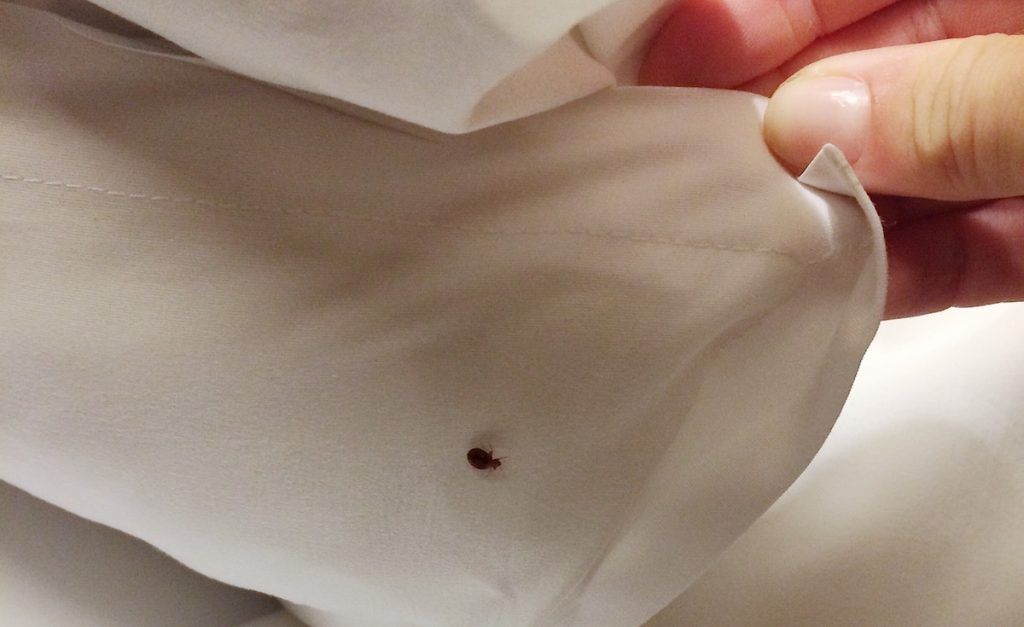
Many people think that bed bugs can’t be seen by the human eye; but that’s not the case at all.  They’re actually about the size of an apple seed.  Bed bugs are reddish-brown in color, and are mostly active at night.  Although they can be found in sneaky places all over a home or business, they mostly like to hide in crevices close to where people sleep.

When their victims are at rest, bed bugs will come out of hiding.  First, they inject a saliva secretion that contains an anesthetic and blood thinner so you don’t feel them bite.  Next, they engorge themselves with blood from people or pets for up to ten minutes. And finally, the bed bug will retreat to reproduce and molt.  A single female bed bug can produce up to 50 adults in one 30-day cycle!

Where do bed bugs come from?

The bed bug problem is definitely worse as you get nearer to the East Coast, but the bugs are literally hitchhiking their way to mid Missouri.  They make their way on luggage, furniture, clothing and even people.  Bed bugs have been found in homes, hotels, apartments, health care facilities, dorms, schools, busses and other public places – it’s easy to see why stopping the spread is so tricky!

Yuck!  Let’s talk prevention.

One of the most disturbing things is that it’s just so hard keep them out of your home once they’ve hitched a ride in.  Homeowners and businesses can practice a few key preventative measures to keep an invasion at bay:

  • Don’t take used or curbside items.
    Bed bugs can live for up to 18 months without feeding, so it’s best not to take a chance on items that could be infected.
  • Treat with heat before you know.
    Smaller items you’re unsure of introducing into the home (clothing, toys, backpacks, shoes, etc.) can be placed in the clothes dryer on a medium-high setting for 20 minutes.  The heat will likely kill all stages of bed bug that may be hiding out.
  • Inspect hotel bedding.
    Take just a few minutes to survey key spots on bedding when you’re staying away from home.  Check for dark spotting or staining, eggs and eggshells, and for the bugs themselves.  Prime locations for bed bugs to hide out are mattress seams and tags, as well as ledges or creases around headboard areas.
  • Take care when you return home.
    To be safe after traveling, wash and dry (in the dryer on medium-high setting) all clothing when you get back from a trip.  Be sure to seal up luggage tightly in a trash bag and leave stored in a garage or basement.

The good news is that when bed bugs become a problem, there is a one-day treatment that will kill them. No matter where they hide out or what stage of development, a professional heat treatment system will get the job done.

We love our pets. There’s nothing better than curling up with your furry best friend at the end of a long day… until you notice the fleas. Those hard-to-catch, hopping, squirming and gross little critters seem to burst out of nowhere and take over your home!

It’s not your imagination – they’re not exactly out of nowhere, but fleas can take over your home so quick it’s scary. Female fleas can lay up to 30 eggs each day, meaning that just 10 female fleas can produce 90,000 eggs in a month’s time! Without immediate measures to take control and stop the breeding cycle, the population can explode and you’ll be living with fleas for a very long time.

Controlling a flea problem starts with where the fleas want to be. If you have a pet, it’s critical to medicate them with a veterinarian-recommended flea protection product to cut off the source of the infestation.

If you don’t have a pet, look outside for signs of wildlife that may be bringing the problem to your door: rabbits and raccoons are known to carry fleas right up next to a home. Then people can pick up fleas in their yard or garden and bring them into the house without knowing. Keeping grass mowed and weeds in check is a good way to cut down on this kind of exposure to fleas.

But unless you choose to bring in a professional pest service, you shouldn’t expect to see results for a while. This is because the adult fleas you see represent only about 1% of the population that’s actually in your home. The other 99% is in another stage of development (egg, larva or pupa). As each stage of development matures into the next, a new wave of fleas will emerge to invade your home and attack your pet.

Homeowners often think they’re treating a repeat problem, when actually they’ve never fully treated the situation to begin with. A professional pest control service can treat the whole problem and work with you to address each of the stages in the flea’s lifecycle in order to finally stop the problem for good.

Just mention the name “brown recluse,” and watch your friends and coworkers make a face. We see that face a lot this time of year, as spring gives way to summer and a new crop of creepy-crawlies becomes active. Ants and termites are also pesky right about now, but this post will focus on Missouri’s two species of poisonous spider: the brown recluse and the black widow.

Both spiders tend to shun humans and make their homes in spots we don’t like to frequent or don’t disturb very often (crawl spaces, attics, the back of a closet, etc.). They usually only come into contact through circumstance, such as pulling that camping equipment out of storage. And even then, the spiders cannot bite unless they are caught or cornered against you. It’s important to keep in mind that while a bite from either of these spiders is certainly a cause for concern, people who are bitten usually come out of it relatively unharmed. That said, reaching out to a medical professional as soon as you realize you’ve been bitten is recommended just to be safe.

Brown recluse are more likely than black widows to come into contact with humans. This is because the recluse likes to inhabit cluttered interior areas that are rarely disturbed, and (unlike the black widow that prefers more open-air locations and rarely leaves it’s web) the recluse leaves the web to actively seek it’s prey at night.

Most homes in Missouri are also home to these poisonous spiders. In fact, studies have shown that brown recluse spiders inhabit nearly 70% of homes that were sampled. You can monitor the spider population in your home by purchasing inexpensive sticky traps and placing them around baseboards, under furniture and in other out-of the-way areas the spiders are likely to visit. Give us a call or contact us if what you find on the traps gives you “the face” – we know what it takes to get rid of these potentially dangerous invaders and keep them out for good.

Steve Hotsenpiller, Owner and President of Steve’s Pest Control, Inc., recently spoke at the Boone County Health Department’s Annual Conference.  Steve participated in a panel discussion focusing on the biology, inspection, and treatment options for Bed Bugs.  Steve’s Pest Control, Inc. is one of the few companies in central Missouri to offer a heat as a Bed Bug treatment option.

From all of us at Steve’s Pest Control, “Thank You!”

Now You've Got a Friend in the Pest Control Business!!